

News and
Activity Reports
(Reports) NEXUS Site Visit @ Cenergi Sua Betong Biogas Plant
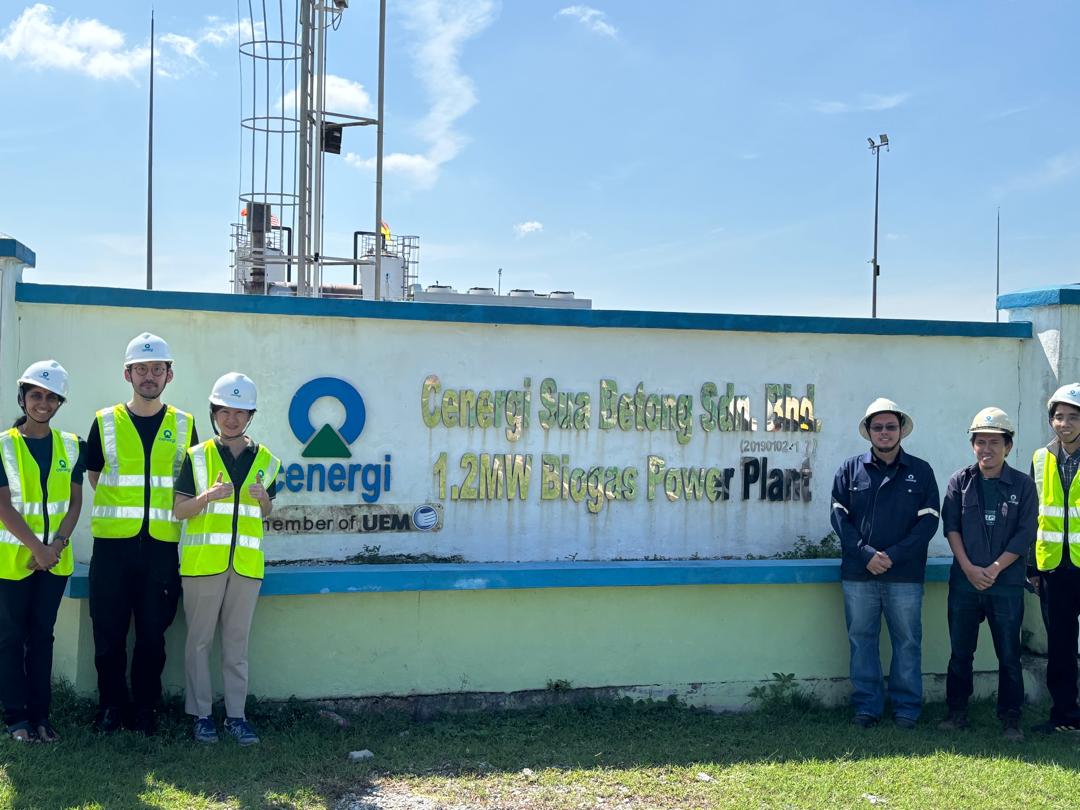
NEXUS Site Visit Held
Location: Cenergi Sua Betong Biogas Plant
Date & Time: 3rd March 2026 & 10AM-12.30PM
Attendees: Prof Adeline (UM), Prof Oshiki (HU), Dr Chuah (UM), Dr Santheraleka (UM), Dr Deepa (UM), Mr Asraf (Cenergi), Ms Farah (Cenergi), Mr Liow Jian Fei (Cenergi), Ms Patmanjalie (Cenergi)
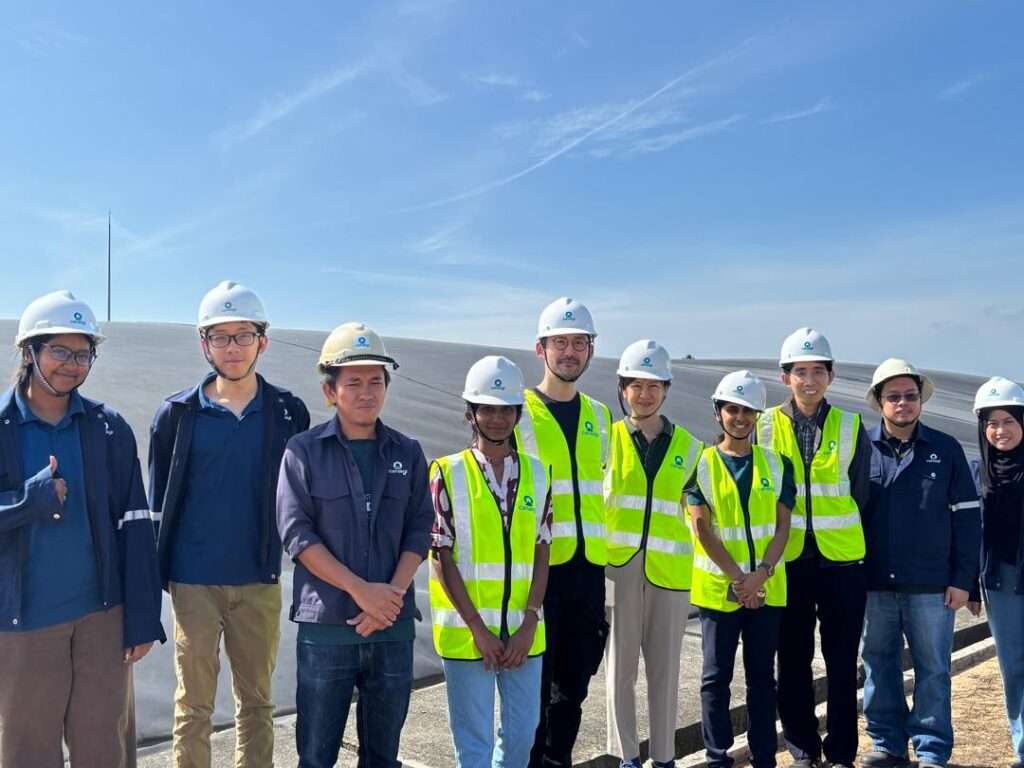
1. Introduction
A field visit was conducted to the biogas facility operated by Cenergi SEA Berhad at the Sua Betong Biogas Plant as part of the initial engagement activities under the MSE x NEXUS “Green Technology” Research Collaboration Grant 2025 titled “Green Conversion of Palm Oil Wastes into Bio-Compressed Natural Gas (Bio-CNG) for Renewable Energy Diversification in Malaysia”. The visit aimed to provide the research team with first-hand exposure to industrial biogas production from palm oil mill residues and to facilitate discussion with the industry partner on potential research collaboration and sample coordination.
2. Site Visit
2.1 Introductory session
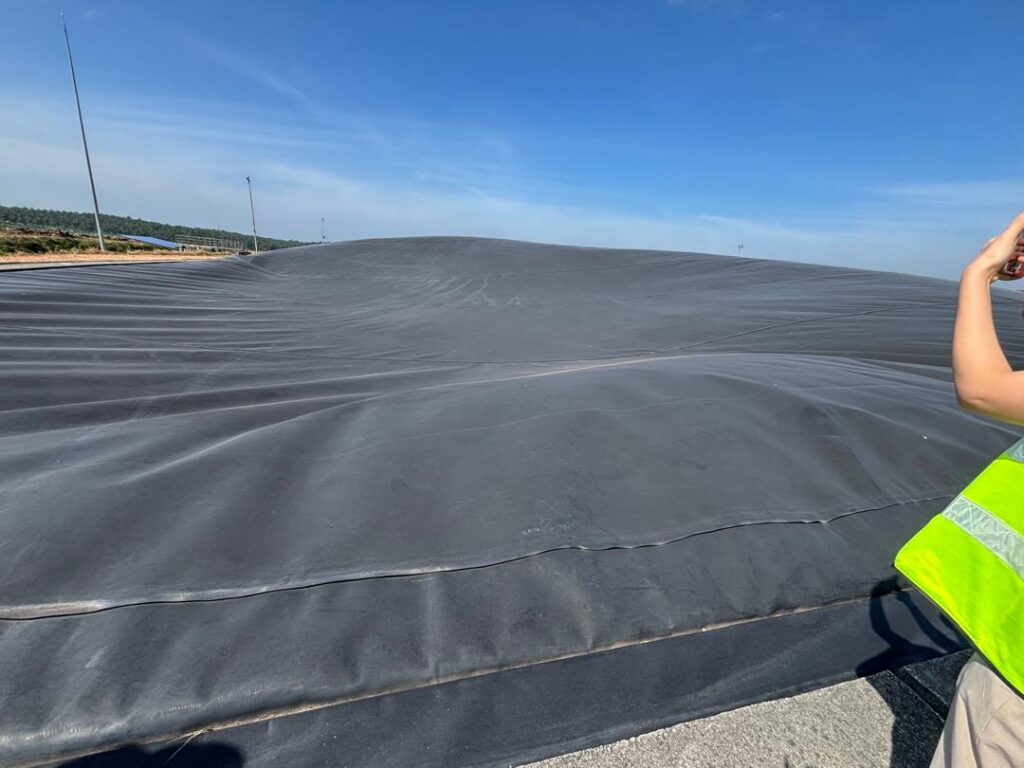
The plant team provided an overview of the biogas production system and waste management practices implemented at the facility. Palm oil mills generate significant quantities of organic waste streams, particularly Palm Oil Mill Effluent (POME) and Empty Fruit Bunch (EFB). These wastes are processed to produce biogas through anaerobic digestion. The captured biogas is subsequently used as a renewable energy source. The plant team also explained that government regulations encourage mills above a certain production capacity to install biogas capture systems to reduce greenhouse gas emissions from POME treatment. This requirement has driven the development of biogas plants within the palm oil industry.
2.2 Guided Site Visit
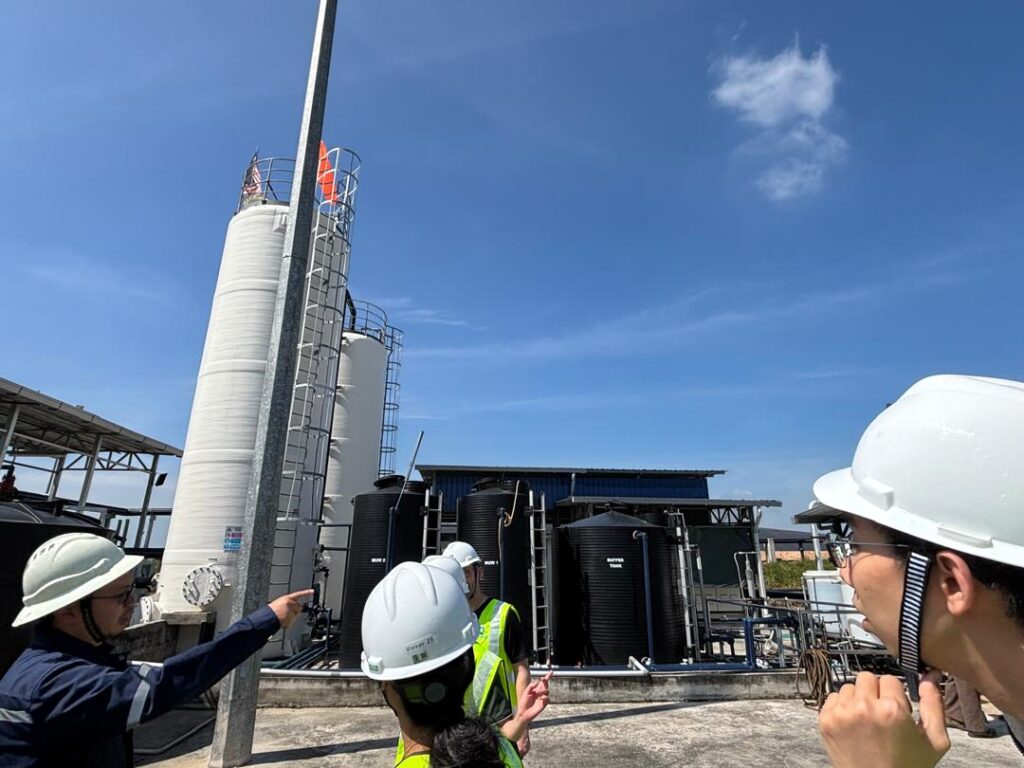
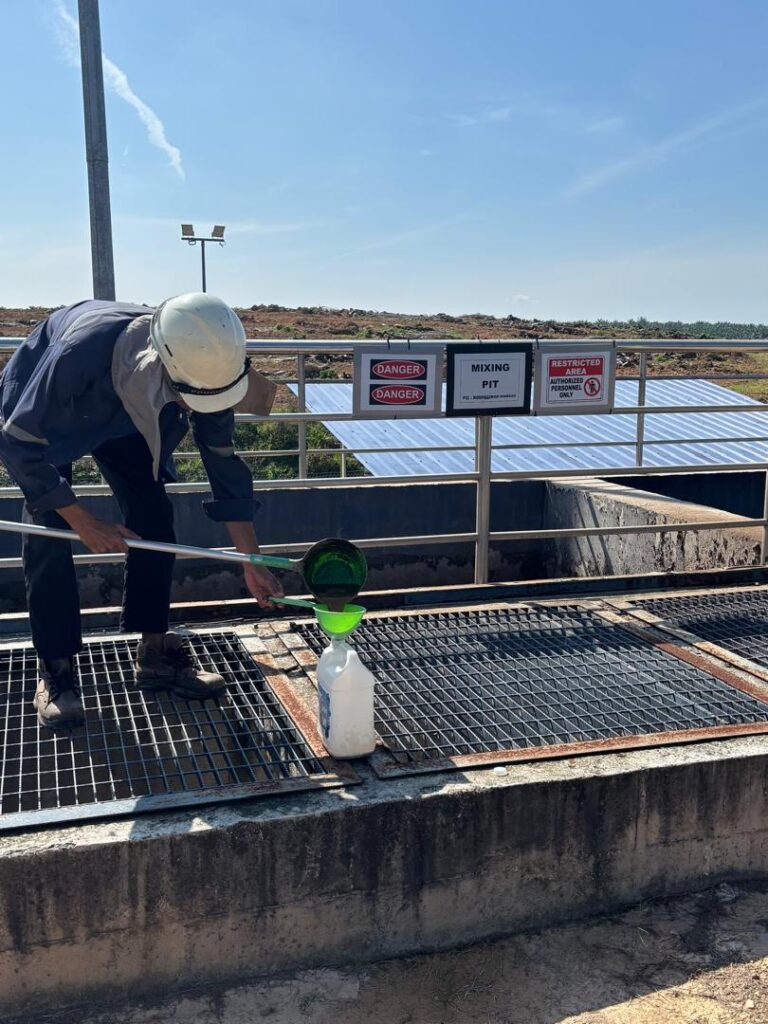
The research team was given a guided tour of the facility by the plant engineers. The visit included observation of several operational units including:
- Feedstock handling and biomass storage areas
- Anaerobic digestion systems used for POME treatment
- Biogas capturing lagoon and processing infrastructure
- Waste management and energy utilization systems
The tour provided useful insight into the practical challenges associated with biomass handling, feedstock variability, and large-scale biogas production.
2.3 Feedback and key points from wrap-up discussion
During the wrap-up discussion with representatives from Cenergi SEA Berhad, several important insights regarding palm oil waste management and biogas production were shared.
Palm oil waste streams
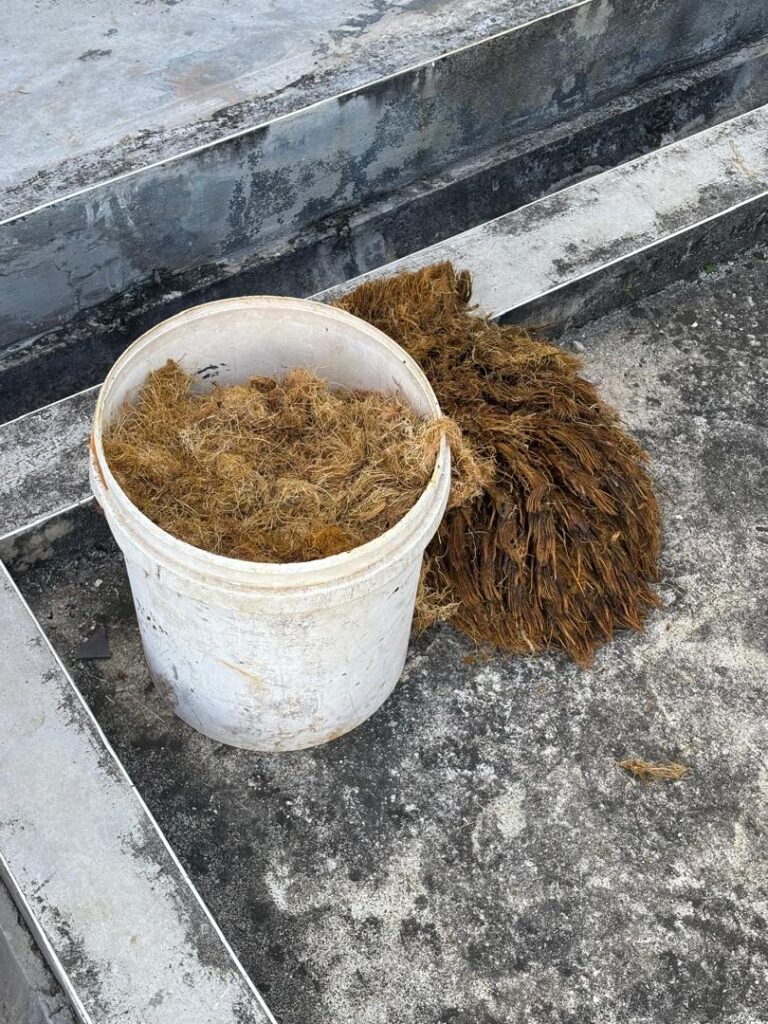
It was highlighted that POME represents the largest waste stream from palm oil mills, followed by EFB as the second largest biomass residue. These waste streams present significant opportunities for renewable energy generation and resource recovery.
Moisture content of biomass
One of the operational challenges discussed is the high moisture content of biomass residues:
- EFB typically contains approximately 65 wt% moisture
- Palm fiber contains approximately 55 wt% moisture
Due to the high moisture levels, additional drying or pretreatment may be required before further processing or conversion into biochar.
Biochar production from EFB
The plant team highlighted the potential of converting EFB into biochar through pyrolysis processes. Biochar production requires thermal treatment to remove moisture and volatile components. Biochar derived from EFB could potentially be used to enhance co-digestion processes in anaerobic digestion systems, improving microbial activity and stabilizing the digestion environment. This approach may provide greater benefits compared to focusing solely on biogas upgrading technologies.
3. Conclusion
The field visit to the Sua Betong Biogas Plant operated by Cenergi SEA Berhad provided valuable insights into the operational aspects of biogas production from palm oil mill residues. The visit also enabled productive discussions regarding biomass utilization, pretreatment strategies, and potential research collaboration. The feedback provided by the industry partner will be instrumental in guiding the research activities of the project, particularly in exploring the role of EFB-derived biochar and co-digestion strategies to enhance biogas production efficiency.
Contact Us
For any inquiries, please contact us here