

News and
Activity Reports
(Reports) NEXUS Kick-off Meeting @ Universiti Malaya
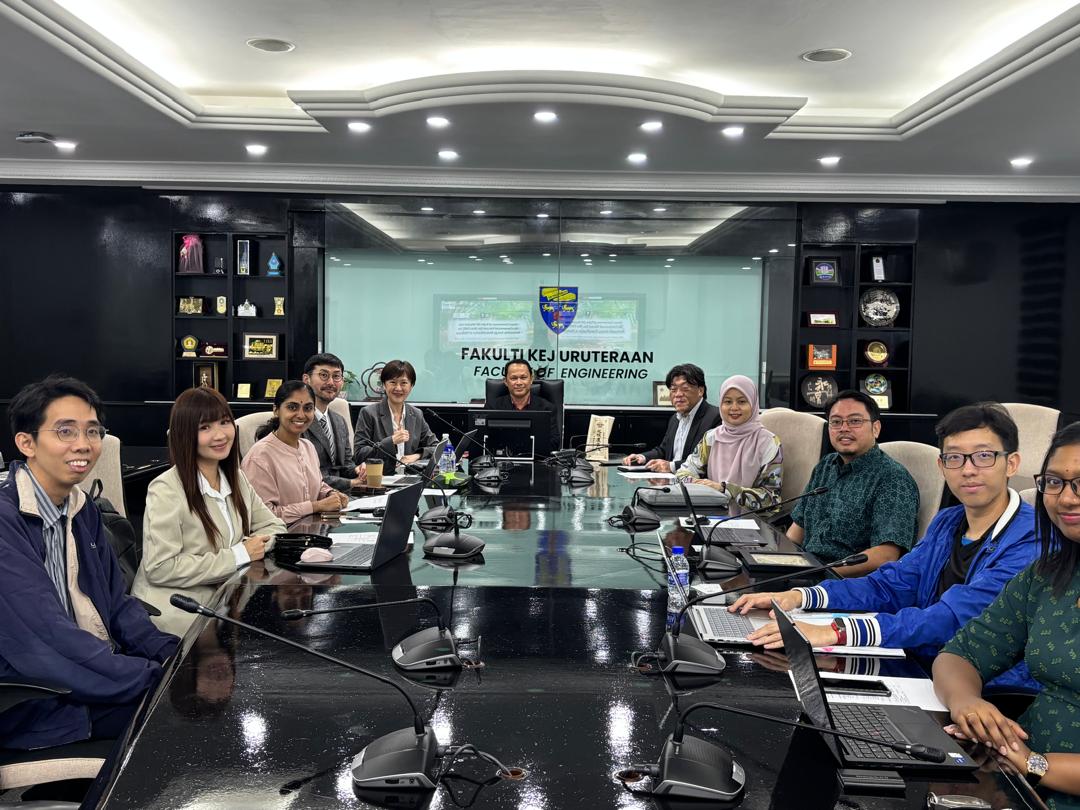
NEXUS Kick-Off Meeting launched
Project Title: Green Conversion of Palm Oil Wastes into Bio-Compressed Natural Gas (Bio-CNG) for Renewable Energy Diversification in Malaysia
Grant: Malaysia Science Endowment × NEXUS Research Collaboration Grant 2025
Date & Time: 4th March 2026, 9 AM-12.30 PM
Venue: Conference Room, Level 4, Block L, Universiti Malaya, Kuala Lumpur, Malaysia
Attendees:
Prof. Ir. Dr. Nik Nazri bin Nik Ghazali, Dean, Faculty of Engineering
Prof. Ir. Dr. Mohd Faizul Mohd Sabri – Deputy Dean (Research), Faculty of Engineering, Universiti Malaya (UM)
Dr. Hanee Farzana Hizaddin – Head, Department of Chemical Engineering, Universiti Malaya (UM)
A/Prof. Dr. Mamoru Oshiki – Principal Investigator (JST-NEXUS), Hokkaido University (HU)
Prof. Dr. Shuichi Kawano – Co-Principal Investigator, Kyushu University (KU)
Dr. Choi Hyungmin – Co-Researcher, Hokkaido University (HU)
Dr. Takashi Kohei – Co-Researcher, Hokkaido University (HU)
Mr. Mohd Asraf bin Hamdan Mustafa – Head, Innovation & Transformation, GCEO Office, Cenergi SEA Berhad
Mr. Liow Jian Fei – Engineer, Innovation & Transformation, GCEO Office, Cenergi SEA Berhad
Ms. Patmanjalie N. Murugesu – Engineer, Innovation & Transformation, GCEO Office, Cenergi SEA Berhad
Prof. Ir. Dr. Adeline Chua Seak May – Principal Investigator (MSE-NEXUS), Universiti Malaya (UM)
Ir. Dr. Chuah Chong Yang – Co-Principal Investigator, Universiti Malaya (UM)
A/Prof. Ir. Dr. Chan Yi Jing – Co-Researcher, University of Nottingham Malaysia (UNM)
Ir. Dr. Santheraleka Ramanathan – Co-Researcher, Universiti Malaya (UM)
1. Introduction
The Kick-Off Meeting for the research project titled “Green Conversion of Palm Oil Wastes into Bio-Compressed Natural Gas (Bio-CNG) for Renewable Energy Diversification in Malaysia” was held on 4 March 2026 at Universiti Malaya. The meeting marked the official commencement of the three-year collaborative project involving academic institutions from Malaysia and Japan, together with industry and government partners. The collaboration focuses on developing sustainable approaches for converting palm oil biomass, particularly Empty Fruit Bunch (EFB), into renewable bioenergy in the form of Bio-CNG.
2. Opening Ceremony
The event began with an opening ceremony attended by distinguished guests, faculty leadership, researchers, and industry partners. The opening ceremony was graced by the presence of:
Nik Nazri Nik Ghazali, Dean of the Faculty of Engineering
Mohd Faizul Mohd Sabri, Deputy Dean (Research & Development)
Hanee Farzana Mohd Foo, Head of the Department of Chemical Engineering
The Dean delivered the opening remarks, highlighting the importance of international collaboration in advancing renewable energy research and supporting Malaysia’s sustainability agenda.
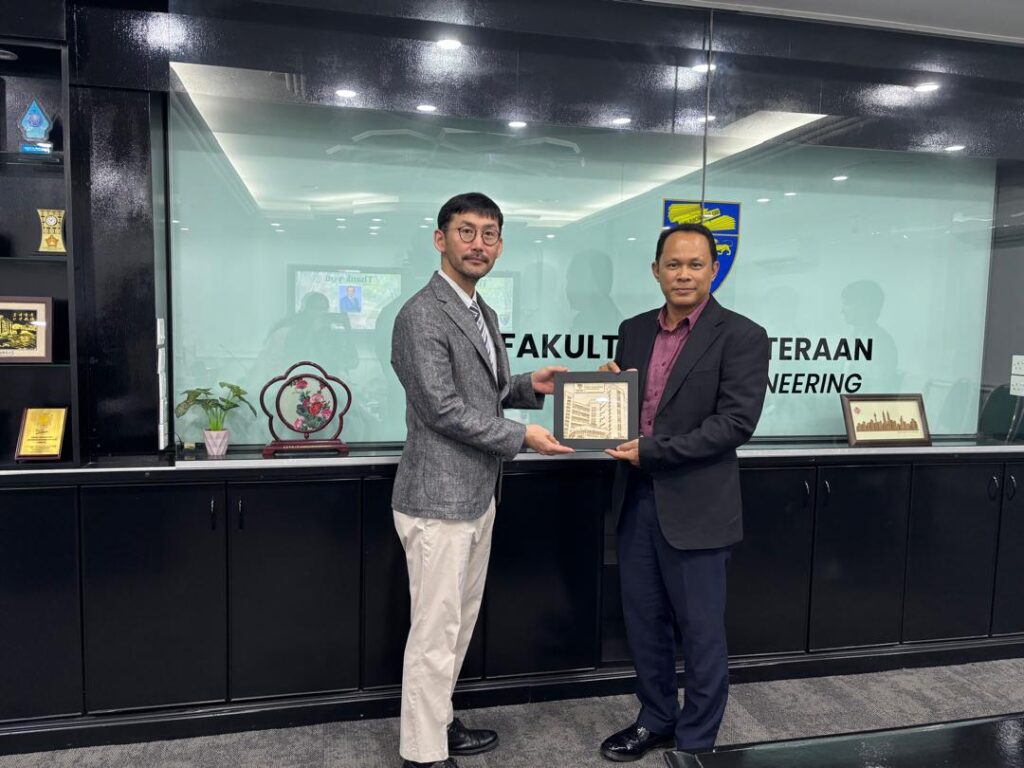
to Assoc. Prof. Oshiki (HU)
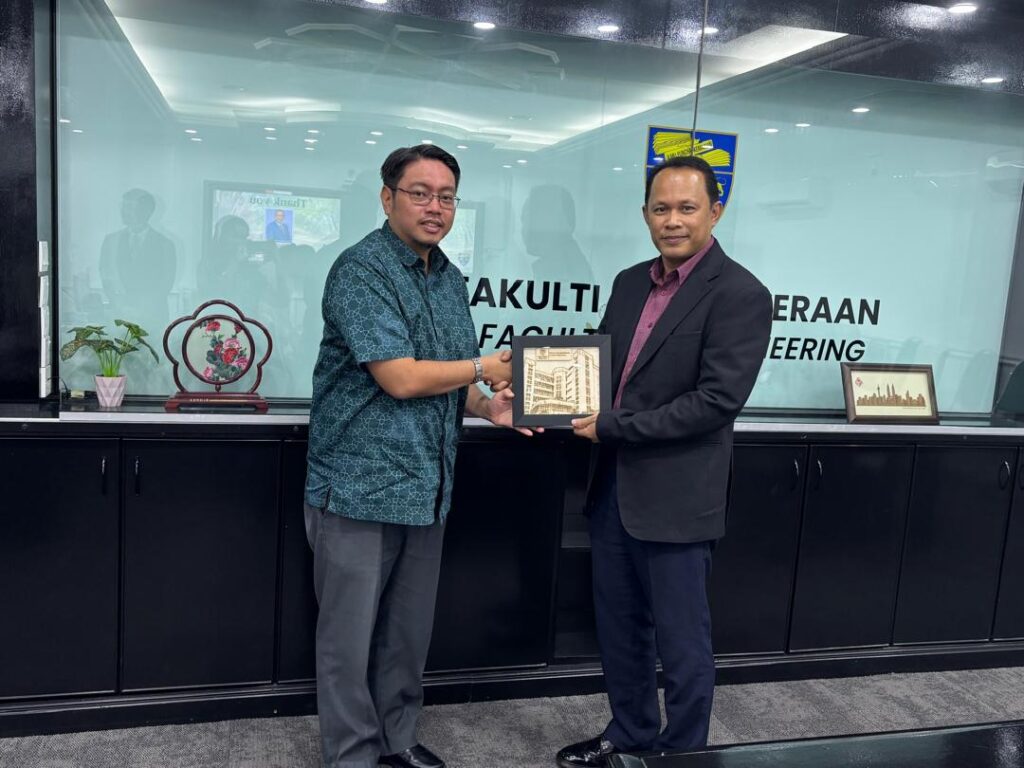
to Mr Asraf (Cenergi SEA Berhad)
3. Introduction of Project Collaborators
3.1 Japan research team
The project is jointly led by collaborators from Japan and Malaysia. The Japan-side Principal Investigator is Mamoru Oshiki from Hokkaido University, who attended the meeting in person. Supporting the project are Shuchi Kawano from Kyushu University, specializing in machine learning modelling; postdoctoral researchers Dr. Kohei and Dr. Hyungmin from Hokkaido University, contributing to microbial dataset collection and bioinformatics analysis.
3.2 Malaysia research team
The Malaysia research team is led by the Principal Investigator, Prof. Adeline from Universiti Malaya, supported by Co-PI Dr. Chuah Chong Yang and a multidisciplinary team of researchers specializing in bioenergy systems, materials science, and environmental engineering. The research team includes Prof. Ngoh Gek Cheng, expertise in EFB pretreatment; Dr. Santheraleka Ramanathan, expertise in EFB pretreatment and biogas upgrading; Dr. Chan Yi Jing from University of Nottingham Malaysia, expertise in co-digestion and system integration.
4. Industry and Government Collaboration
The industry partner for this project is Cenergi SEA Berhad, lead by Ir Kwok Yew Hoe, represented during the meeting by Mr. Asraf, Head of Innovation and Transformation. The project also involves collaboration with the Malaysian Palm Oil Board, represented by Dr. Loh Soh Kheang.
5. Hybrid Technical Session
Following the opening ceremony, the meeting continued with a hybrid technical session involving both physical and virtual participants.
5.1 Project Overview
During the session, the Malaysia-side Principal Investigator, Prof. Adeline, presented an overview of the three-year project plan and the key objectives from the Malaysian research team. This was followed by a presentation by Prof Oshiki, who introduced Hokkaido University and the Water Quality Control (WQC) Laboratory, as well as the contributions of the Japan team to the project.The industry partner, Cenergi SEA Berhad, also shared their perspective on industry needs and their role in supporting the project through technical expertise and access to biomass resources.
5.2. Work Package Presentations
The research activities of the project are organized into three main Work Packages (WPs).
WP1: Green Pretreatment of EFB for Enhanced Biogas Production
WP2: Batch and Continuous Co-Digestion of POME and EFB
WP3: CO2 Adsorbent Development Using EFB-Derived Biochar
5.3. Feedback by Cenergi SEA Berhad
Cenergi highlighted that Palm Oil Mill Effluent (POME) is currently the largest waste stream generated from palm oil mills, followed by Empty Fruit Bunch (EFB) as the second largest biomass residue. Existing biogas plants already utilize POME through anaerobic digestion to produce biogas, which is captured and further processed for energy generation. However, the management and utilization of EFB remain a significant challenge due to its high moisture content (approximately 65 wt%), which makes direct processing and energy recovery less efficient.
Overall, the representatives from Cenergi expressed strong interest in the project’s focus on EFB valorization and biogas system enhancement, as these approaches support the company’s efforts in sustainable waste management, renewable energy production, and carbon emission reduction. They also indicated their willingness to facilitate biomass and POME sample supply, operational insights, and potential future testing opportunities to support the research activities.
6. Conclusion
The Kick-Off Meeting successfully brought together all project partners to formally initiate the collaboration and discuss the implementation strategy for the three-year research program.
The meeting provided an important platform for strengthening communication among academic researchers, industry partners, and government stakeholders. The discussions also helped align research objectives, clarify work package responsibilities, and establish administrative procedures for the collaboration.
The project team looks forward to productive research activities, knowledge exchange between Malaysia and Japan, and impactful outcomes that contribute to renewable energy diversification and sustainable palm oil waste management in Malaysia.
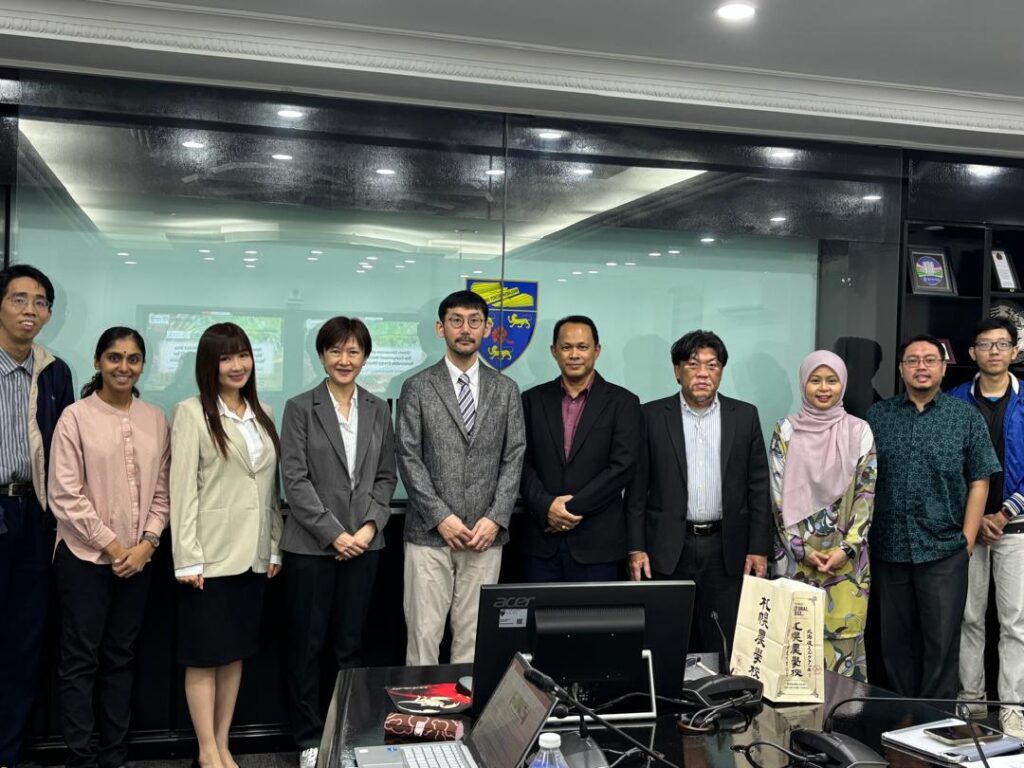
academia, industry and government partners
Contact Us
For any inquiries, please contact us here