Our members participated in the Water and Environment Technology Conference 2026 (WET2026), held at Doshisha University, Kyoto, Japan, on 11–12 July 2026. The conference brought together approximately 300 researchers and featured around 190 technical presentations, providing an excellent opportunity to exchange the latest advances in water and environmental technologies.
During the conference, Dr. Yunjeong Choi and Dr. Hyungmin Choi (Hokkaido University Postdoctoral Researchers), together with Prof. Mamoru Oshiki (PI), presented their latest research findings on anaerobic digestion, magnetite-assisted biogas production, and statistical approaches for identifying key microbial taxa in activated sludge. The meeting provided valuable opportunities to discuss our research with scientists from academia and industry, exchange ideas on sustainable environmental technologies, and strengthen our research network for future collaborations.
We are also delighted to announce that Dr. Yunjeong Choi received the WET Excellent Presentation Award for her outstanding presentation. Congratulations to Dr. Choi on this well-deserved achievement🎖️ We look forward to continuing our research and international collaborations through the NEXUS Project.
Kick-off Meeting Held for the NEXUS Japan–Malaysia Green Technology Program
On June 22, 2026, the kick-off meeting for the NEXUS Japan–Malaysia Green Technology Program was held at the JST Tokyo Headquarters Annex. Principal Investigators (PIs) and Co-Principal Investigators (Co-PIs) from the 5 selected projects gathered to introduce their research plans and exchange ideas on future collaboration.
The meeting provided a valuable opportunity to interact with the Program Officer (PO), Advisors (ADs), and fellow researchers participating in the program. Through presentations, discussions, and networking activities, participants deepened their mutual understanding and explored opportunities for future cooperation across the NEXUS research community.
The event helped strengthen connections among the project teams and laid the foundation for productive international collaboration between Japan and Malaysia.
Grant: Malaysia Science Endowment × NEXUS Research Collaboration Grant 2025
Date & Time: 28th May 2026, 9.00 am – 10:30 am
Venue: Ibu Pejabat MPOB, 6, Persiaran Institut, Kawasan Institusi Bangi, 43000 Bandar Baru Bangi, Selangor
Attendees:
Prof. Ir. Dr. Adeline Chua Seak May – Universiti Malaya (UM) Assoc. Prof. Ir. Dr. Chan Yi Jing – University of Nottingham Malaysia Ir. Dr. Chuah Chong Yang – Universiti Malaya (UM) Mr. Lee Jia Jing – Universiti Malaya (UM) Dr. Loh Soh Kheang – MPOB
1. Introduction
A visit was conducted to the MPOB located at Bangi. The Malaysian Palm Oil Board (MPOB) (Malay: Lembaga Minyak Sawit Malaysia) is the premier government agency responsible for the promotion, regulation, and development of the palm oil industry in Malaysia. Operating under the Ministry of Plantation and Commodities, it serves as the backbone of one of the country’s most vital economic sectors.
2. Description
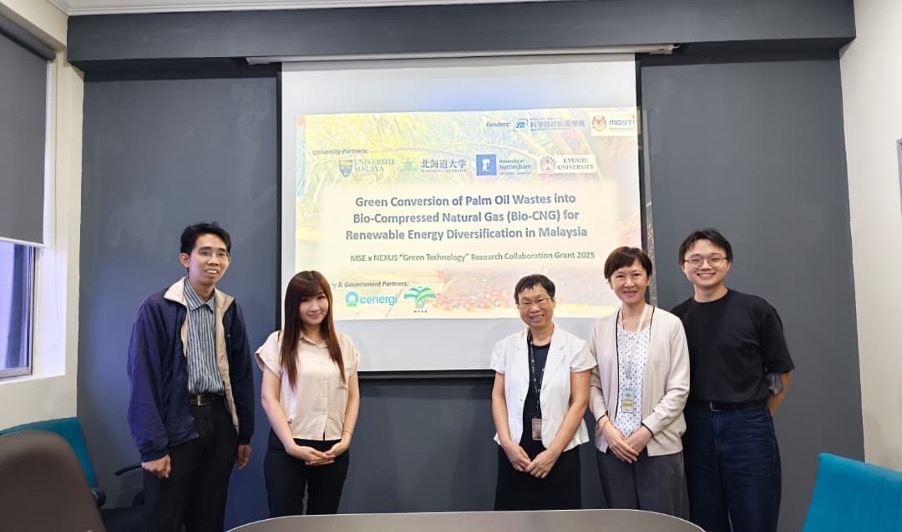
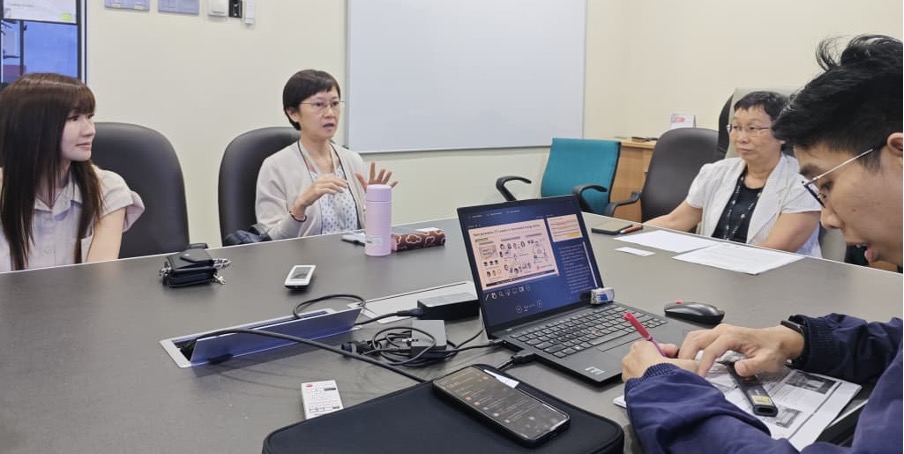
Dr. Loh provided a brief overview of MPOB, while the researchers from UM and the University of Nottingham Malaysia provided a brief overview of the JST-NEXUS project. Dr. Loh is keen to assist with the project in an advisory role. Further discussion and negotiation through research supervision will be discussed and elaborated further with the subsequent grants, with the successful recipients of this prestigious international collaboration.
Grant: Malaysia Science Endowment × NEXUS Research Collaboration Grant 2025
Date & Time: 18th May 2026, 9:00 AM – 10:30 AM
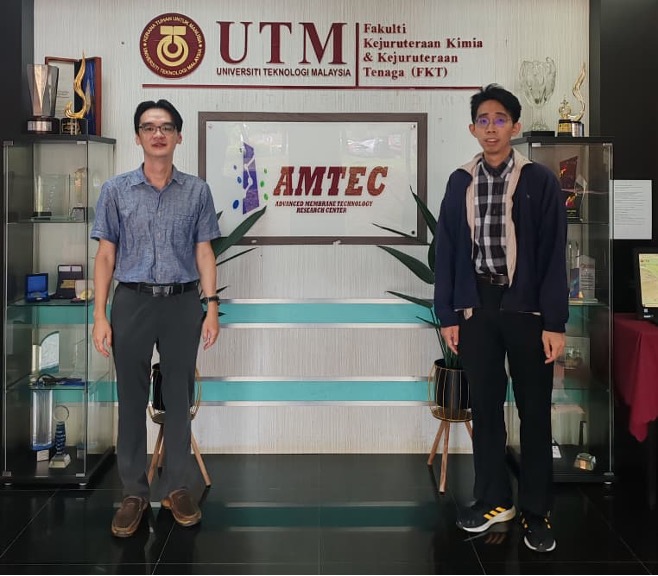
Venue: Advanced Membrane Technology Research Centre (AMTEC), Faculty of Chemical & Energy Engineering, Universiti Teknologi Malaysia (UTM), Skudai, Johor, Malaysia
Attendees:
Ir. Dr. Chuah Chong Yang – Co-Principal Investigator, Universiti Malaya (UM) Prof. Dr. Lau Woei Jye – Advanced Membrane Technology Research Centre (AMTEC), Universiti Teknologi Malaysia (UTM)
1. Introduction
The Kick-Off Meeting for the research project titled “Green Conversion of Palm Oil Wastes into Bio-Compressed Natural Gas (Bio-CNG) for Renewable Energy Diversification in Malaysia” was held on 4 March 2026 at Universiti Malaya. The meeting marked the official commencement of the three-year collaborative project involving academic institutions from Malaysia and Japan, together with industry and government partners. The collaboration focuses on developing sustainable approaches for converting palm oil biomass, particularly Empty Fruit Bunch (EFB), into renewable bioenergy in the form of Bio-CNG.
2. Technical Discussion and Laboratory Visit
During the visit, Prof. Lau Woei Jye introduced the management structure of AMTEC, including the research administration framework and Key Performance Indicators (KPIs) required for maintaining HiCoE status under the Malaysian Ministry of Higher Education. Following the discussion session, a laboratory tour was conducted to introduce the advanced research and characterization facilities available at AMTEC. The facilities visited included:Scanning Electron Microscopy (SEM), Atomic Force Microscopy (AFM), Hollow fiber membrane spinning facilities, Pyrolysis laboratory, and Gas chromatography systems. The visit also included discussions on membrane technologies for sustainable water treatment, environmental monitoring, and resource recovery applications.
3. SATREPS Information Exchange
Prof. Lau additionally shared information and brochures related to the SATREPS (Science and Technology Research Partnership for Sustainable Development) program conducted in collaboration with Nagasaki University. The discussion provided useful insights into international research management, membrane-based water treatment technologies, and future possibilities for academic collaboration between Malaysian and Japanese institutions.
4. Conclusion
The visit provided a valuable opportunity to strengthen academic networking and technical exchange between Universiti Malaya and Universiti Teknologi Malaysia. The discussions contributed to broader perspectives on advanced environmental technologies, membrane science, and future collaborative opportunities related to sustainable resource and environmental management. The NEXUS project team looks forward to continuing technical discussions and expanding collaborative activities with Malaysian research institutions in the fields of renewable energy, environmental engineering, and sustainable technology development.
Project Title: Green Conversion of Palm Oil Wastes into Bio-Compressed Natural Gas (Bio-CNG) for Renewable Energy Diversification in Malaysia
Grant: Malaysia Science Endowment × NEXUS Research Collaboration Grant 2025
Date & Time: 4th March 2026, 9 AM-12.30 PM
Venue: Conference Room, Level 4, Block L, Universiti Malaya, Kuala Lumpur, Malaysia
Attendees:
Prof. Ir. Dr. Nik Nazri bin Nik Ghazali, Dean, Faculty of Engineering Prof. Ir. Dr. Mohd Faizul Mohd Sabri – Deputy Dean (Research), Faculty of Engineering, Universiti Malaya (UM) Dr. Hanee Farzana Hizaddin – Head, Department of Chemical Engineering, Universiti Malaya (UM) A/Prof. Dr. Mamoru Oshiki – Principal Investigator (JST-NEXUS), Hokkaido University (HU) Prof. Dr. Shuichi Kawano – Co-Principal Investigator, Kyushu University (KU) Dr. Choi Hyungmin – Co-Researcher, Hokkaido University (HU) Dr. Takashi Kohei – Co-Researcher, Hokkaido University (HU) Mr. Mohd Asraf bin Hamdan Mustafa – Head, Innovation & Transformation, GCEO Office, Cenergi SEA Berhad Mr. Liow Jian Fei – Engineer, Innovation & Transformation, GCEO Office, Cenergi SEA Berhad Ms. Patmanjalie N. Murugesu – Engineer, Innovation & Transformation, GCEO Office, Cenergi SEA Berhad Prof. Ir. Dr. Adeline Chua Seak May – Principal Investigator (MSE-NEXUS), Universiti Malaya (UM) Ir. Dr. Chuah Chong Yang – Co-Principal Investigator, Universiti Malaya (UM) A/Prof. Ir. Dr. Chan Yi Jing – Co-Researcher, University of Nottingham Malaysia (UNM) Ir. Dr. Santheraleka Ramanathan – Co-Researcher, Universiti Malaya (UM)
1. Introduction
The Kick-Off Meeting for the research project titled “Green Conversion of Palm Oil Wastes into Bio-Compressed Natural Gas (Bio-CNG) for Renewable Energy Diversification in Malaysia” was held on 4 March 2026 at Universiti Malaya. The meeting marked the official commencement of the three-year collaborative project involving academic institutions from Malaysia and Japan, together with industry and government partners. The collaboration focuses on developing sustainable approaches for converting palm oil biomass, particularly Empty Fruit Bunch (EFB), into renewable bioenergy in the form of Bio-CNG.
2. Opening Ceremony
The event began with an opening ceremony attended by distinguished guests, faculty leadership, researchers, and industry partners. The opening ceremony was graced by the presence of:
Nik Nazri Nik Ghazali, Dean of the Faculty of Engineering Mohd Faizul Mohd Sabri, Deputy Dean (Research & Development) Hanee Farzana Mohd Foo, Head of the Department of Chemical Engineering
The Dean delivered the opening remarks, highlighting the importance of international collaboration in advancing renewable energy research and supporting Malaysia’s sustainability agenda.
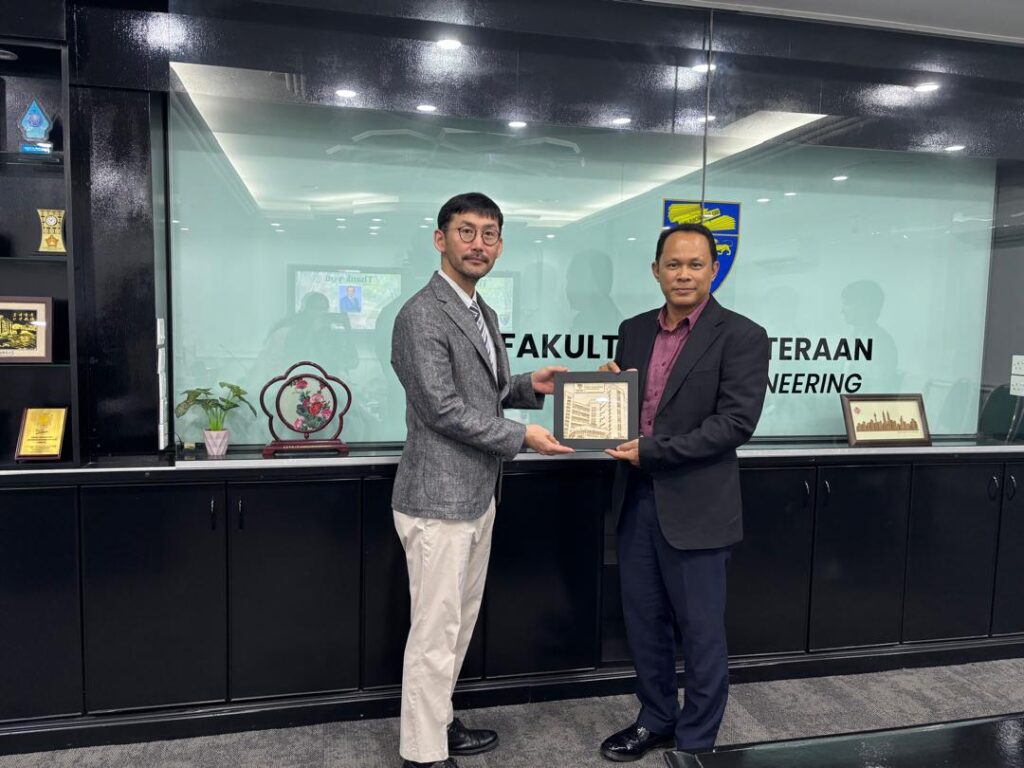
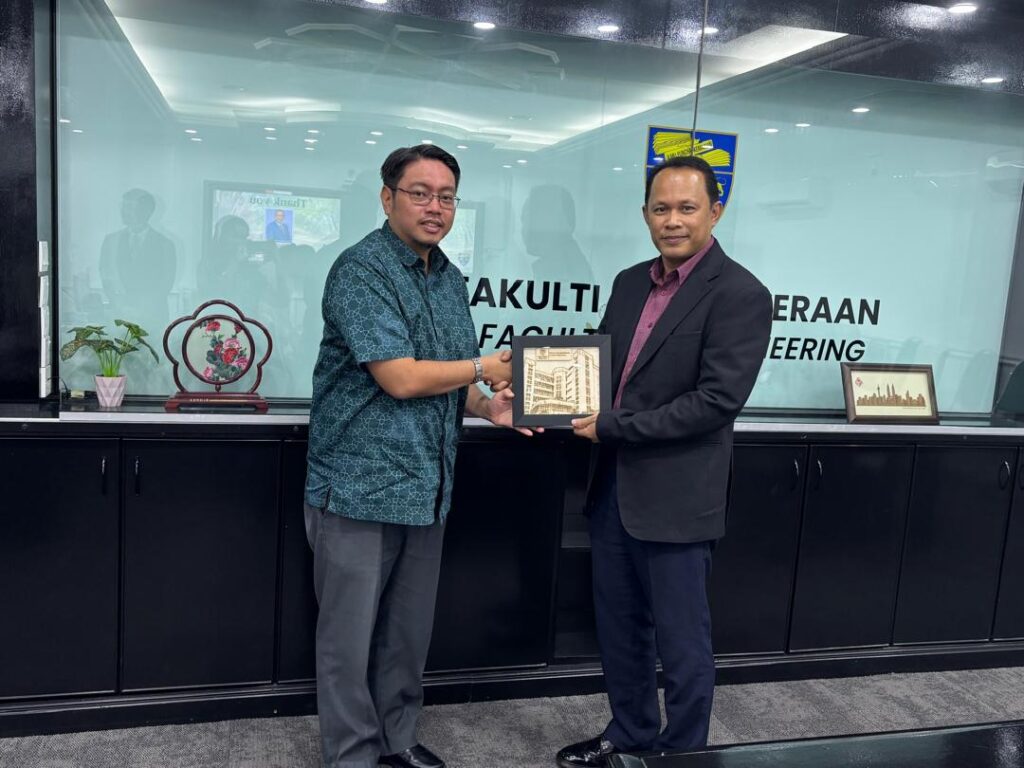
Token of appreciation from Prof Nik Nazri to Assoc. Prof. Oshiki (HU)Token of appreciation from Prof Nik Nazri to Mr Asraf (Cenergi SEA Berhad)
3. Introduction of Project Collaborators
3.1 Japan research team
The project is jointly led by collaborators from Japan and Malaysia. The Japan-side Principal Investigator is Mamoru Oshiki from Hokkaido University, who attended the meeting in person. Supporting the project are Shuchi Kawano from Kyushu University, specializing in machine learning modelling; postdoctoral researchers Dr. Kohei and Dr. Hyungmin from Hokkaido University, contributing to microbial dataset collection and bioinformatics analysis.
3.2 Malaysia research team
The Malaysia research team is led by the Principal Investigator, Prof. Adeline from Universiti Malaya, supported by Co-PI Dr. Chuah Chong Yang and a multidisciplinary team of researchers specializing in bioenergy systems, materials science, and environmental engineering. The research team includes Prof. Ngoh Gek Cheng, expertise in EFB pretreatment; Dr. Santheraleka Ramanathan, expertise in EFB pretreatment and biogas upgrading; Dr. Chan Yi Jing from University of Nottingham Malaysia, expertise in co-digestion and system integration.
4. Industry and Government Collaboration
The industry partner for this project is Cenergi SEA Berhad, lead by Ir Kwok Yew Hoe, represented during the meeting by Mr. Asraf, Head of Innovation and Transformation. The project also involves collaboration with the Malaysian Palm Oil Board, represented by Dr. Loh Soh Kheang.
5. Hybrid Technical Session
Following the opening ceremony, the meeting continued with a hybrid technical session involving both physical and virtual participants.
5.1 Project Overview
During the session, the Malaysia-side Principal Investigator, Prof. Adeline, presented an overview of the three-year project plan and the key objectives from the Malaysian research team. This was followed by a presentation by Prof Oshiki, who introduced Hokkaido University and the Water Quality Control (WQC) Laboratory, as well as the contributions of the Japan team to the project.The industry partner, Cenergi SEA Berhad, also shared their perspective on industry needs and their role in supporting the project through technical expertise and access to biomass resources.
5.2. Work Package Presentations
The research activities of the project are organized into three main Work Packages (WPs).
WP1: Green Pretreatment of EFB for Enhanced Biogas Production
WP2: Batch and Continuous Co-Digestion of POME and EFB
WP3: CO2 Adsorbent Development Using EFB-Derived Biochar
5.3. Feedback by Cenergi SEA Berhad
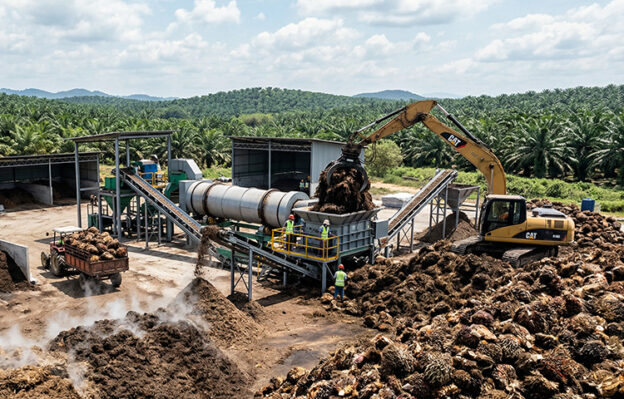
Cenergi highlighted that Palm Oil Mill Effluent (POME) is currently the largest waste stream generated from palm oil mills, followed by Empty Fruit Bunch (EFB) as the second largest biomass residue. Existing biogas plants already utilize POME through anaerobic digestion to produce biogas, which is captured and further processed for energy generation. However, the management and utilization of EFB remain a significant challenge due to its high moisture content (approximately 65 wt%), which makes direct processing and energy recovery less efficient.
Overall, the representatives from Cenergi expressed strong interest in the project’s focus on EFB valorization and biogas system enhancement, as these approaches support the company’s efforts in sustainable waste management, renewable energy production, and carbon emission reduction. They also indicated their willingness to facilitate biomass and POME sample supply, operational insights, and potential future testing opportunities to support the research activities.
6. Conclusion
The Kick-Off Meeting successfully brought together all project partners to formally initiate the collaboration and discuss the implementation strategy for the three-year research program.
The meeting provided an important platform for strengthening communication among academic researchers, industry partners, and government stakeholders. The discussions also helped align research objectives, clarify work package responsibilities, and establish administrative procedures for the collaboration.
The project team looks forward to productive research activities, knowledge exchange between Malaysia and Japan, and impactful outcomes that contribute to renewable energy diversification and sustainable palm oil waste management in Malaysia.
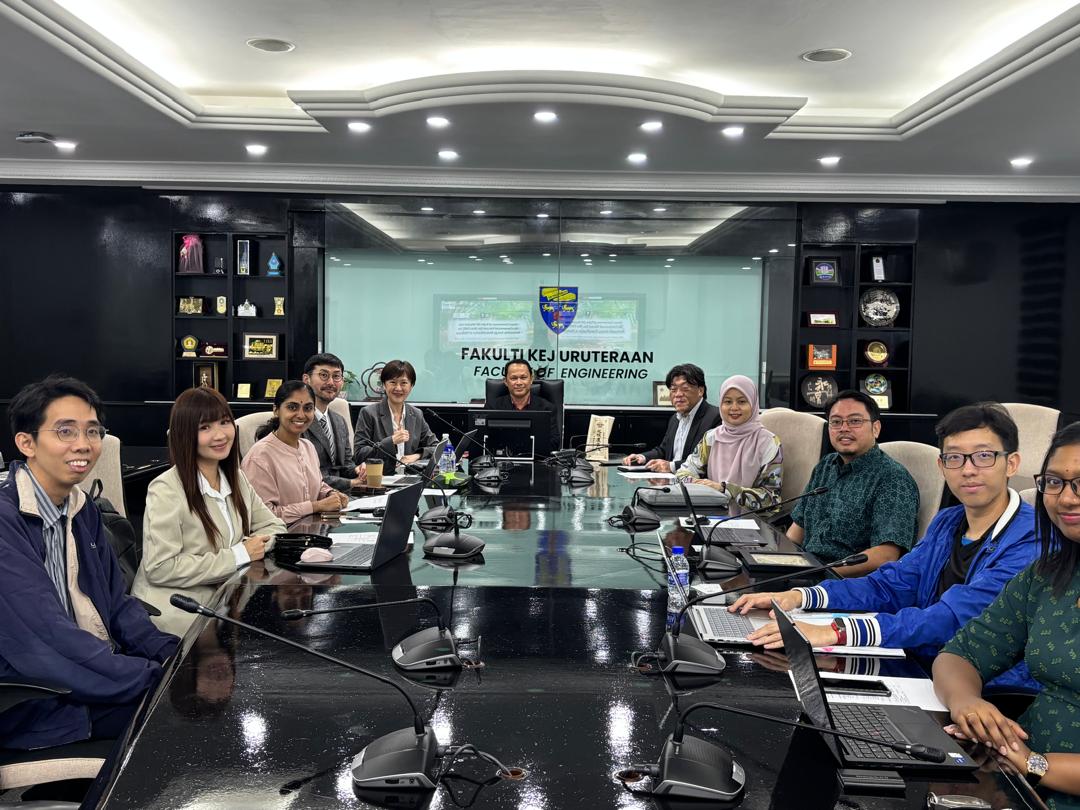
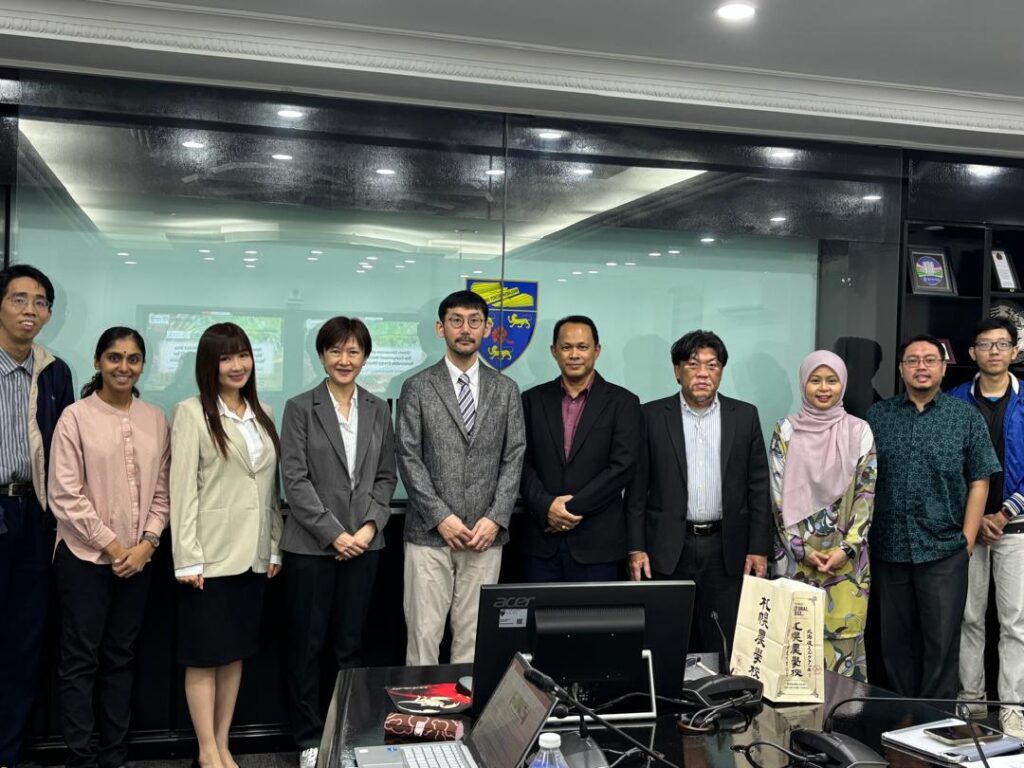
Group photo of kick-off meeting, denoting official commencement of the grant between academia, industry and government partners
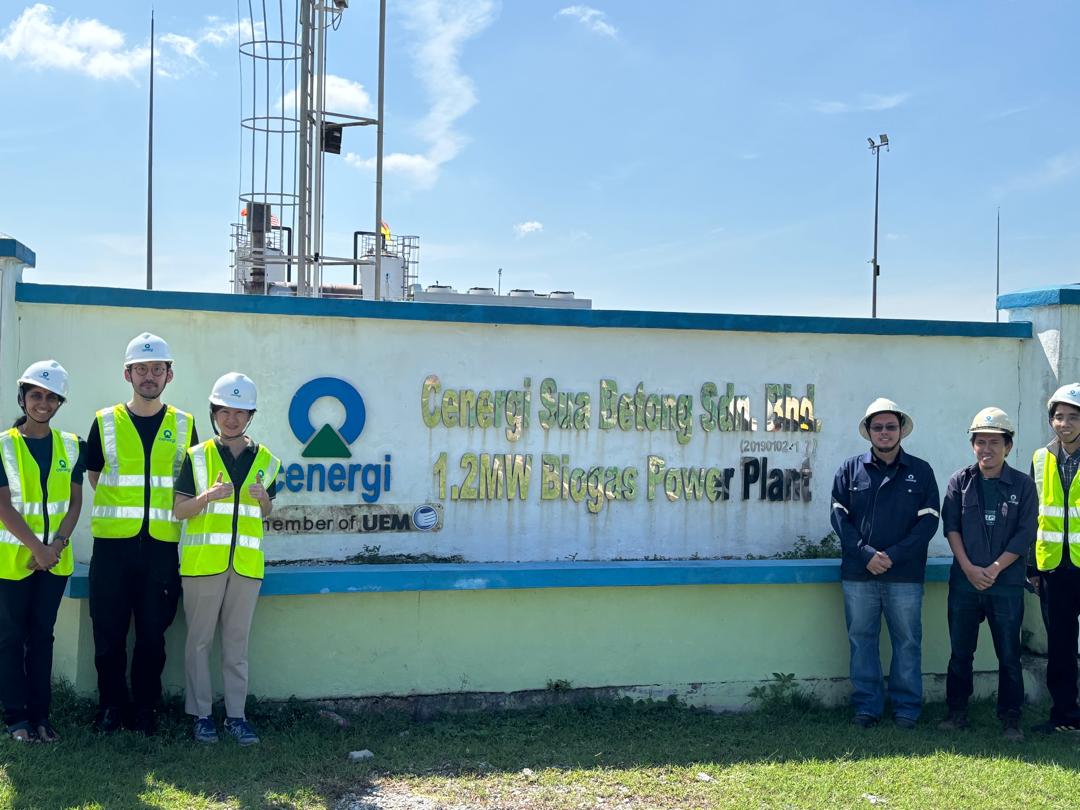
Group photo of the Universiti Malaya (UM) research team and industry partners from Cenergi SEA Berhad at the Cenergi Sua Betong Biogas Plant
NEXUS Site Visit Held
Location: Cenergi Sua Betong Biogas Plant
Date & Time: 3rd March 2026 & 10AM-12.30PM
Attendees:Prof Adeline (UM), Prof Oshiki (HU),Dr Chuah (UM), Dr Santheraleka (UM), Dr Deepa (UM), Mr Asraf (Cenergi), Ms Farah (Cenergi), Mr Liow Jian Fei (Cenergi), Ms Patmanjalie (Cenergi)
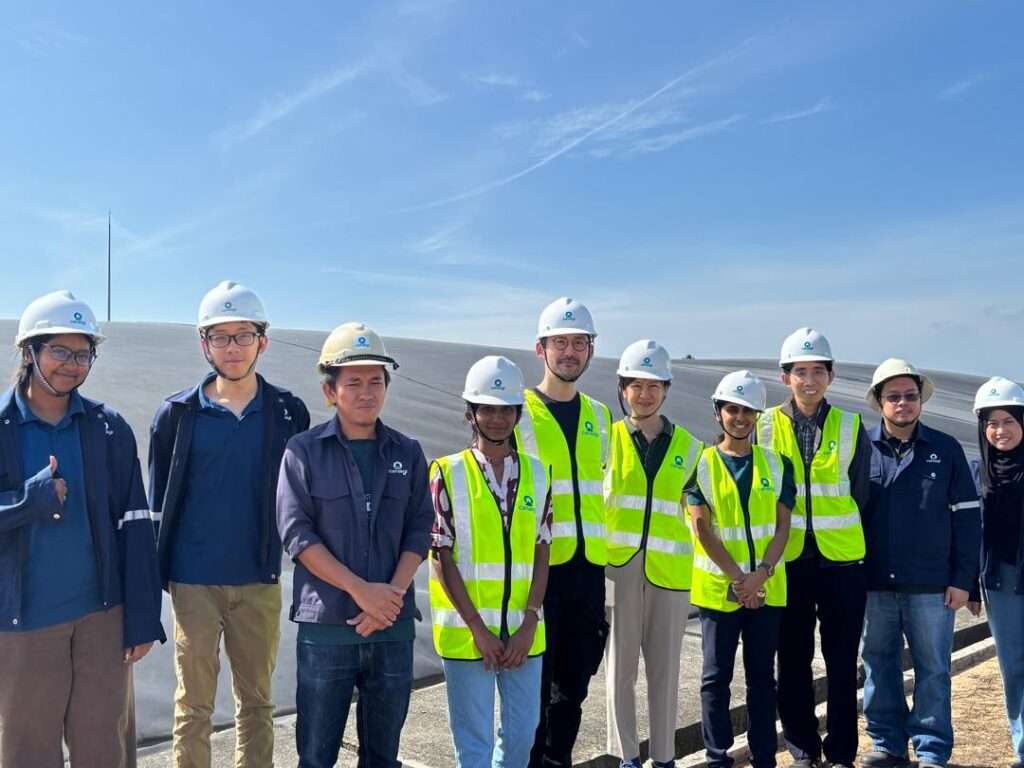
The Universiti Malaya (UM) research team and industry partners from Cenergi SEA Berhad at the biogas lagoon of the plant
1. Introduction
A field visit was conducted to the biogas facility operated by Cenergi SEA Berhad at the Sua Betong Biogas Plant as part of the initial engagement activities under the MSE x NEXUS “Green Technology” Research Collaboration Grant 2025 titled “Green Conversion of Palm Oil Wastes into Bio-Compressed Natural Gas (Bio-CNG) for Renewable Energy Diversification in Malaysia”. The visit aimed to provide the research team with first-hand exposure to industrial biogas production from palm oil mill residues and to facilitate discussion with the industry partner on potential research collaboration and sample coordination.
2. Site Visit
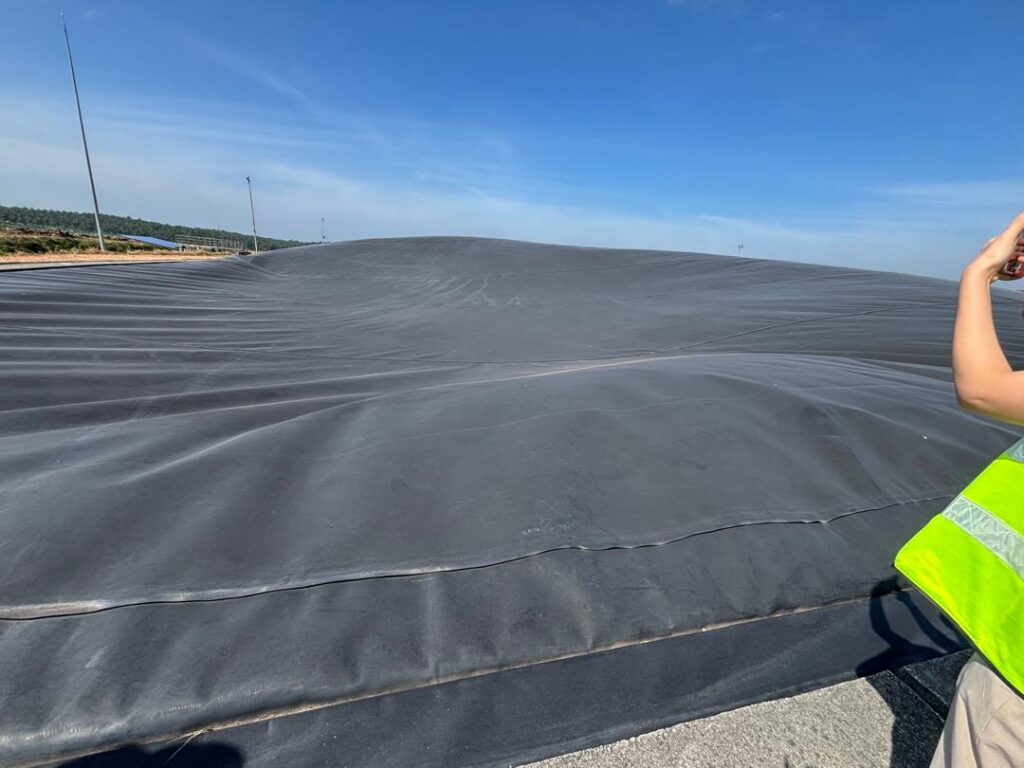
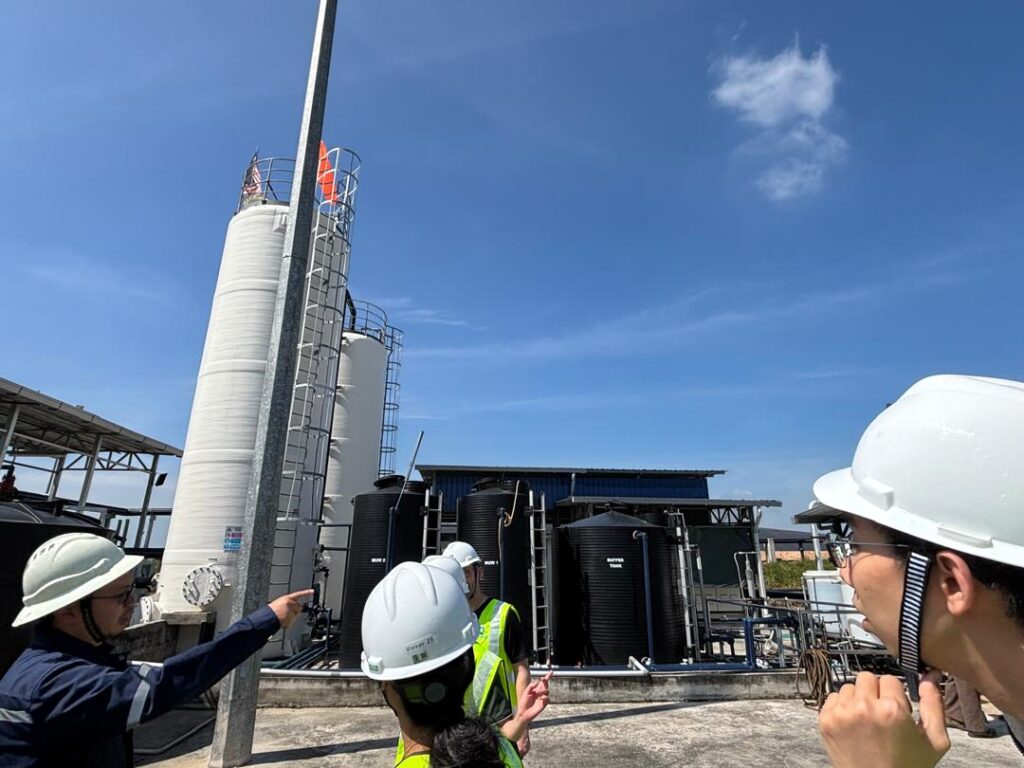
Anaerobic digestion of POME, producing biogas captured in the lagoon.
2.1 Introductory session
The plant team provided an overview of the biogas production system and waste management practices implemented at the facility. Palm oil mills generate significant quantities of organic waste streams, particularly Palm Oil Mill Effluent (POME) and Empty Fruit Bunch (EFB). These wastes are processed to produce biogas through anaerobic digestion. The captured biogas is subsequently used as a renewable energy source. The plant team also explained that government regulations encourage mills above a certain production capacity to install biogas capture systems to reduce greenhouse gas emissions from POME treatment. This requirement has driven the development of biogas plants within the palm oil industry.
2.2 Guided Site Visit
The research team was given a guided tour of the facility by the plant engineers. The visit included observation of several operational units including:
Feedstock handling and biomass storage areas
Anaerobic digestion systems used for POME treatment
Biogas capturing lagoon and processing infrastructure
Waste management and energy utilization systems
The tour provided useful insight into the practical challenges associated with biomass handling, feedstock variability, and large-scale biogas production.
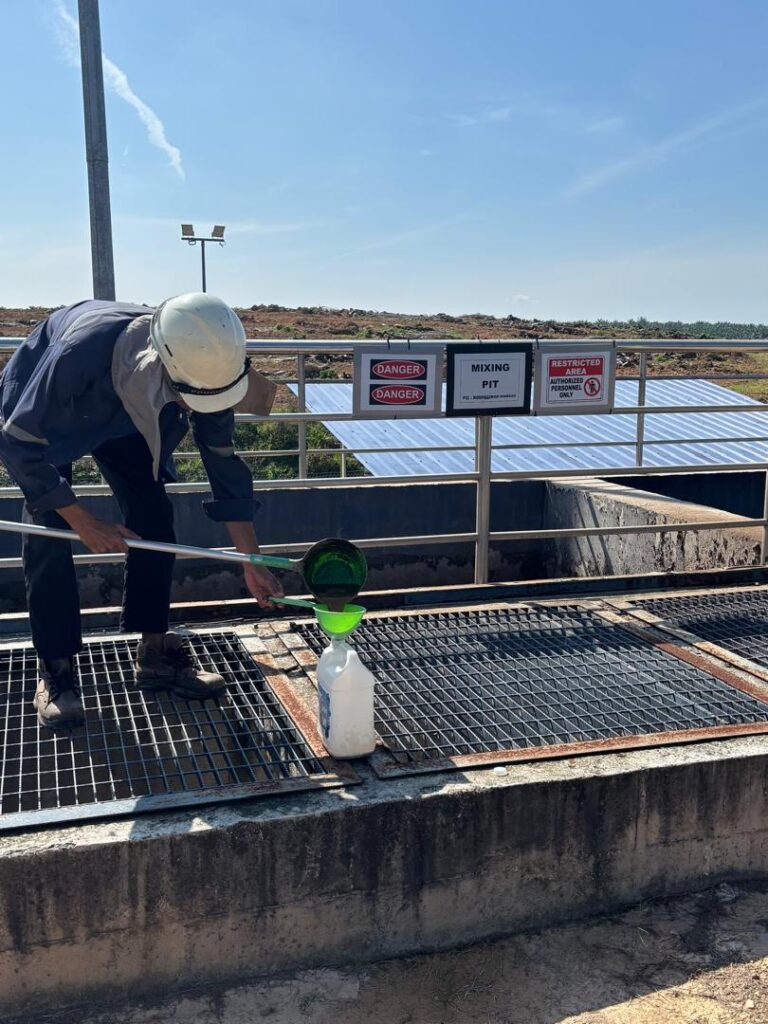
Scrubber column tank used to remove hydrogen sulfide from biogas prior to the energy conversion processCollection of POME samples
2.3 Feedback and key points from wrap-up discussion
During the wrap-up discussion with representatives from Cenergi SEA Berhad, several important insights regarding palm oil waste management and biogas production were shared.
Palm oil waste streams
It was highlighted that POME represents the largest waste stream from palm oil mills, followed by EFB as the second largest biomass residue. These waste streams present significant opportunities for renewable energy generation and resource recovery.
Moisture content of biomass
One of the operational challenges discussed is the high moisture content of biomass residues:
EFB typically contains approximately 65 wt% moisture
Palm fiber contains approximately 55 wt% moisture
Due to the high moisture levels, additional drying or pretreatment may be required before further processing or conversion into biochar.
Biochar production from EFB
The plant team highlighted the potential of converting EFB into biochar through pyrolysis processes. Biochar production requires thermal treatment to remove moisture and volatile components. Biochar derived from EFB could potentially be used to enhance co-digestion processes in anaerobic digestion systems, improving microbial activity and stabilizing the digestion environment. This approach may provide greater benefits compared to focusing solely on biogas upgrading technologies.
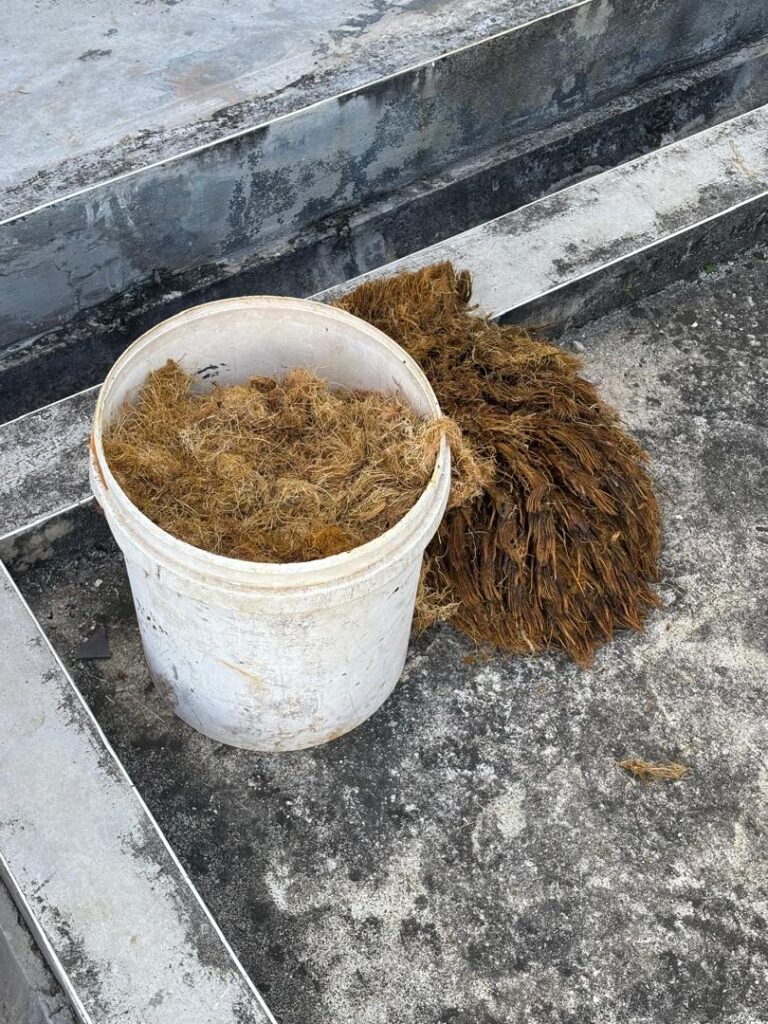
EFB and its fiber
3. Conclusion
The field visit to the Sua Betong Biogas Plant operated by Cenergi SEA Berhad provided valuable insights into the operational aspects of biogas production from palm oil mill residues. The visit also enabled productive discussions regarding biomass utilization, pretreatment strategies, and potential research collaboration. The feedback provided by the industry partner will be instrumental in guiding the research activities of the project, particularly in exploring the role of EFB-derived biochar and co-digestion strategies to enhance biogas production efficiency.
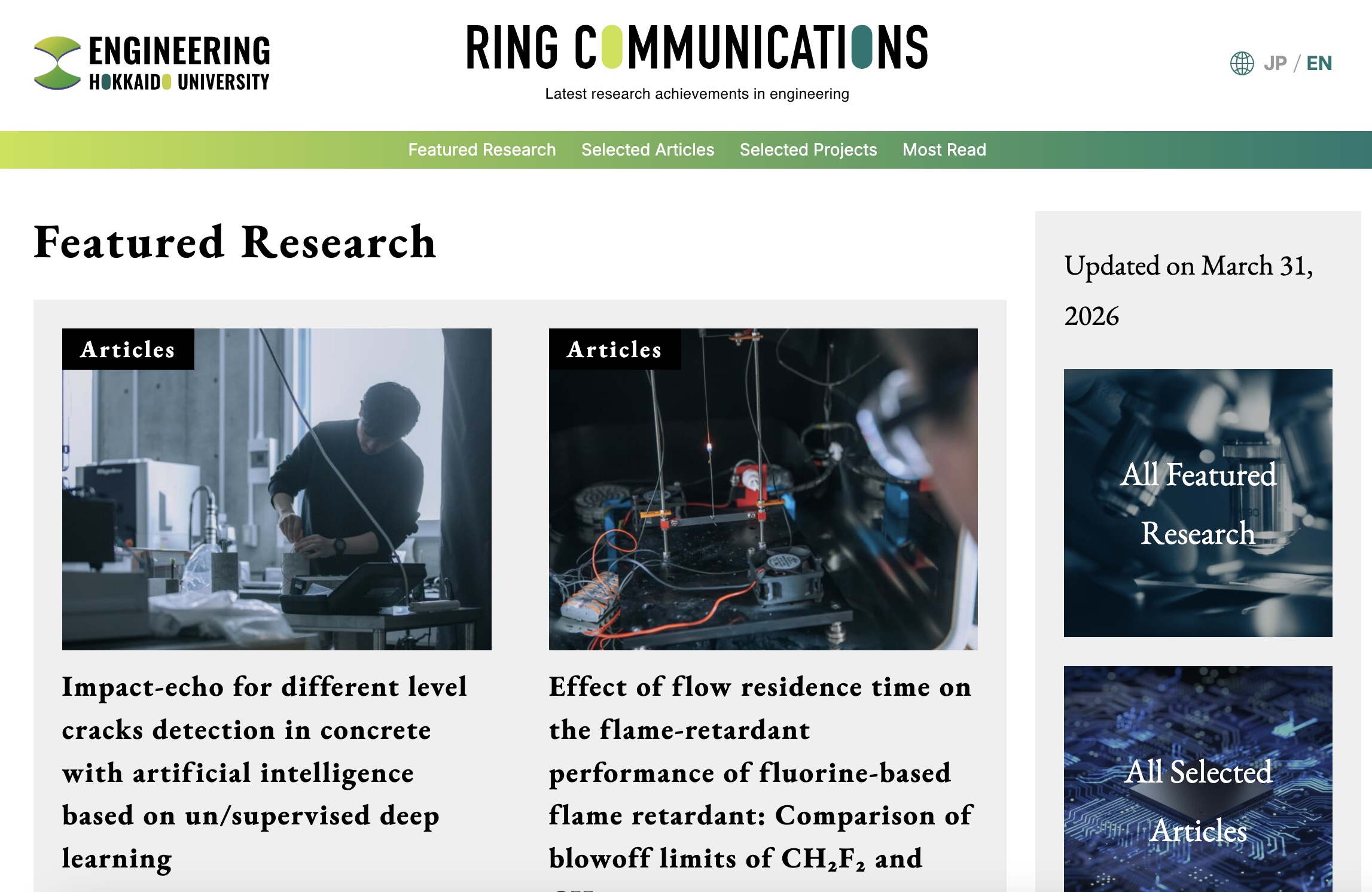
Our NEXUS project has been featured in RING Communications, a public outreach platform of Hokkaido University. RING Communications showcases a variety of ongoing and cutting-edge projects within the Faculty of Engineering. Our project is introduced as one of these active and impactful research initiatives.
We hope you will take a moment to explore the platform and learn more about the exciting research currently being conducted. We would like to express our sincere appreciation to the RING Communications team for featuring our work.